Service
METRC Reconciliation for Massachusetts Cannabis Businesses
Connect seed-to-sale, point-of-sale, inventory and cash data to the general ledger, identify the differences that matter, and build cannabis accounting records management can actually rely on.
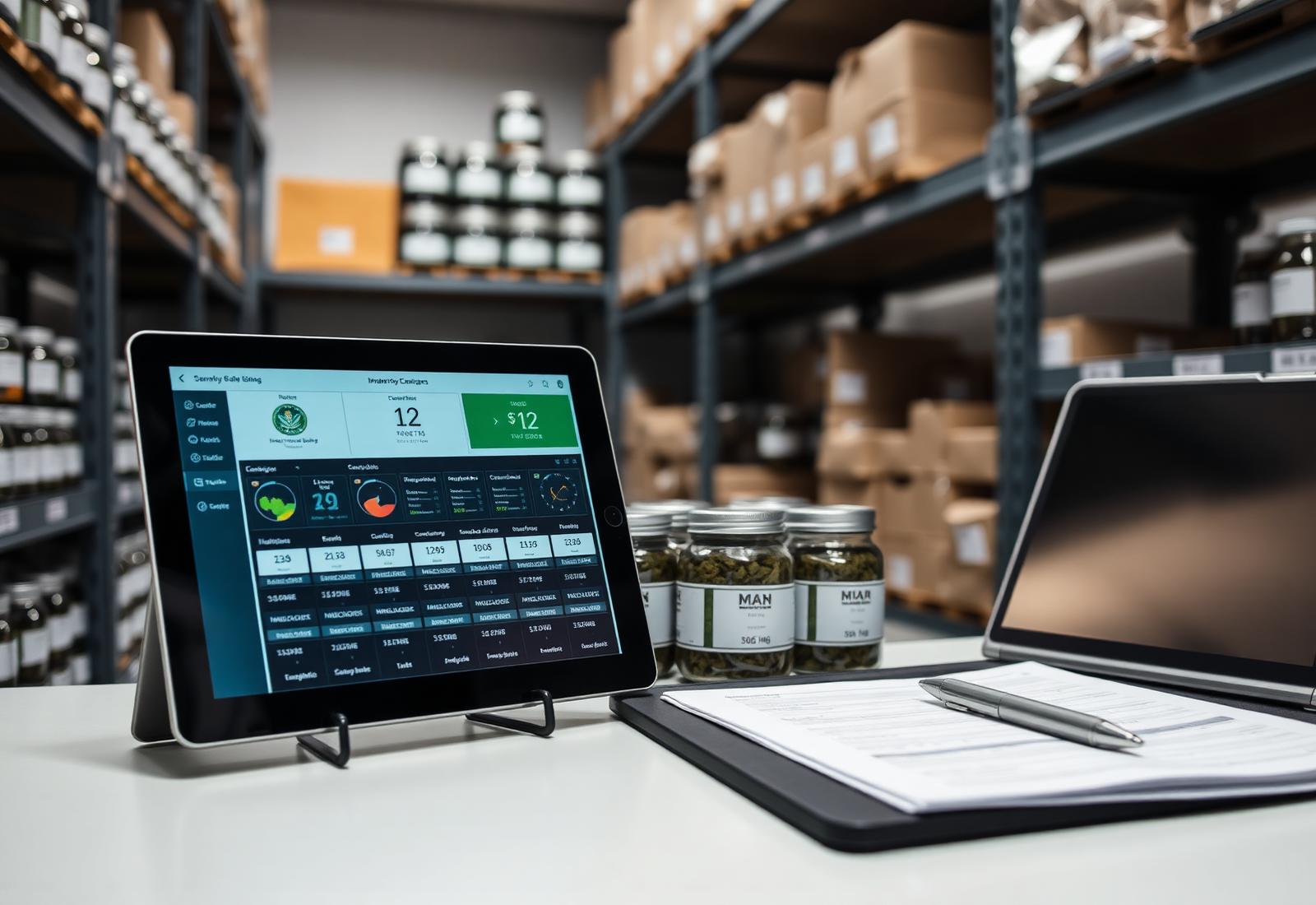
What Is METRC Reconciliation?
METRC reconciliation is the process of comparing relevant seed-to-sale operational information with other business systems and with the accounting records, in order to identify differences that may require investigation. Depending on the business and the scope of the engagement, that comparison can involve seed-to-sale records, point-of-sale records, sales totals, inventory quantities, transfers, adjustments, cash, bank deposits and general-ledger balances.
The most common misunderstanding is worth clearing up first: reconciliation does not mean every system should contain identical data. Operational tracking systems and accounting systems are built for different purposes and record different aspects of the same business. One counts product and movement; the other measures financial position and results. They will diverge, and some divergence is expected.
The objective is narrower and more useful — to understand whether the relevant differences can be explained, and whether the financial records accurately reflect the business activity that took place. A difference that has a known cause is a reconciling item. A difference nobody can account for is a problem that eventually reaches the financial statements.
METRC is a third-party seed-to-sale tracking platform used by licensed operators. This firm is an independent accounting practice with no affiliation with, endorsement by, or partnership with METRC, the Cannabis Control Commission, or any state agency or software vendor. The term is used here descriptively to describe accounting work performed with data operators already maintain.
METRC vs POS vs Accounting Software
Nearly every reconciliation conversation starts here, because operators are often told — usually implicitly — that one of these systems is the source of truth for everything. None of them is.
Seed-to-sale tracking
Primarily tracks regulated product activity and related operational information: packages, quantities, transfers, adjustments, waste and disposition. It is an operational and reporting system, not a ledger.
Point of sale
Primarily records retail transactions: items sold, pricing, discounts, tax collected and tender type. It knows what happened at the register, not what it cost or how it was recorded financially.
Accounting system
Records the financial impact of business activity in the general ledger — revenue, inventory, cost of goods sold, cash, liabilities and equity — and produces the financial statements.
Why all three are needed
Each answers a different question. The tracking system answers where product went, the POS answers what was sold and how it was paid for, and the ledger answers what it all did to the business financially.
How the three relate
- 01Seed-to-sale system — regulated product activity and movement
- 02Point of sale — retail transactions, tender and sales detail
- 03Accounting system — the financial record in the general ledger
- 04Reconciliation — the deliberate comparison across all three
No one of these systems automatically replaces the others, and no integration removes the need to review. Integrations move data; they do not verify it. A mapping error inside an integration can produce months of consistently wrong entries that look perfectly tidy in the ledger.
Why Cannabis Businesses Reconcile Operational & Financial Data
Differences between systems are normal. They arise from ordinary operating activity and ordinary accounting mechanics, and most have a mundane explanation once someone looks.
- Timing — activity recorded in one system before or after the accounting period cutoff
- Data entry — quantities, prices or package detail keyed incorrectly
- Adjustments — operational corrections with no corresponding accounting entry
- Returns and voids — reversals handled differently in each system
- Discounts — presented in one system and netted in another
- Inventory changes — waste, destruction, samples and internal use
- Transfers — movement between licenses or locations recorded inconsistently
- System integrations — mapping errors, duplicates and failed syncs
- Manual journal entries — adjustments made in the ledger with no operational source
- Cash handling — the gap between cash recorded, cash moved and cash deposited
- Incorrect mappings — a product, tender type or account pointed at the wrong target
Left unresolved, these differences do not stay contained. They work through inventory and cost of goods sold, distort gross margin, misstate cash, and eventually produce financial statements that management does not trust and that require reconstruction at year end before tax preparation can proceed.
Seed-to-Sale Reconciliation
Seed-to-sale reconciliation is the platform-independent version of this work. Whatever tracking system a jurisdiction uses, the underlying relationship is the same: product activity is recorded operationally, and that same activity has a financial consequence that must be recorded in the accounting system.
Operational lifecycle to financial record
- 01Product and inventory activity — cultivation, production, receipt, packaging
- 02Seed-to-sale system — the operational record of packages, quantities and movement
- 03Sale, transfer or adjustment — the event that changes what the business holds
- 04Financial impact — revenue recognized, inventory relieved, cost recorded
- 05Accounting system — the entries that carry it into the financial statements
The connection between the operational record and the financial record should be a repeatable process rather than an occasional investigation. When it runs every period, differences are small, recent and easy to explain. When it runs once a year, the same differences arrive as a twelve-month backlog with incomplete supporting detail, and the people who could have explained a given adjustment have often moved on.
Operators looking for background on the tracking system itself can read our METRC guide, which covers the operational side; this page is about the accounting reconciliation built on top of it.
Dispensary Reconciliation
Retail is where the most reconciliation points converge, because a dispensary generates high transaction volume, significant cash activity and constant inventory movement, all in the same day. Dispensary reconciliation compares the operating data those activities produce with the accounting records.
Typical data sources include:
- Point-of-sale sales reports for the period
- Tender totals by payment type
- Cash received and cash movement records
- Bank deposits and bank statement activity
- Inventory quantities and movement
- Seed-to-sale package and sales data
- Revenue recorded in the general ledger
- Cost of goods sold and inventory balances in the ledger
Sales and cash path
- 01POS sales — transactions recorded at the register
- 02Tender — the payment types those sales were settled in
- 03Cash and payment activity — what was actually received
- 04Deposits — funds reaching the bank account
- 05General ledger — revenue, tax and cash recorded in the books
Product and inventory path
- 01Product sold — units leaving the shelf
- 02Inventory activity — the corresponding reduction in stock
- 03Seed-to-sale data — the operational record of that movement
- 04Financial inventory and COGS — the accounting effect in the ledger
These two paths have to be walked separately, because a dispensary can reconcile its cash perfectly and still have inventory and cost of goods sold that make no sense. For the broader retail accounting function this reconciliation sits inside, see dispensary accounting and our work with dispensaries.
Cannabis POS Reconciliation
Point-of-sale reconciliation compares what the register recorded with what the accounting system says happened. It sounds mechanical, and in a clean month it is — but it is the check that catches the largest share of revenue misstatements before they reach a financial statement.
POS information is compared with:
- Sales recorded in the general ledger for the same period
- Cash received and reconciled cash activity
- Other tender activity — card, debit and alternative payment types
- Bank deposits corresponding to those tender types
- Inventory activity generated by the same transactions
- Accounting revenue by category or department where reporting supports it
Differences commonly trace back to a short list of causes:
- Voids processed after a report was generated
- Returns handled as negative sales in one system and adjustments in another
- Discounts shown gross in one place and net in another
- Timing across the period cutoff, especially late-evening activity
- Incorrect tender mapping sending payments to the wrong account
- Duplicate transactions from a re-run or overlapping integration
- Missing transactions from a failed sync
- Integration mapping errors that misclassify tax or discount amounts
The practical rule: POS totals should be reviewed before they are relied on, not imported and assumed correct. An automated feed makes the entry faster; it does not make it right.
Dispensary Cash Reconciliation
Cash reconciliation is an accounting procedure that follows the money from the register to the ledger. Cannabis retail still moves meaningful volumes of cash, and cash is the one asset where a recording gap and a real loss look identical in the books until someone reconciles.
Cash from register to ledger
- 01POS cash sales — the amount the register says was collected in cash
- 02Cash received — what was actually counted and accounted for
- 03Cash movement — transfers between drawers, safes and locations
- 04Deposits — funds reaching the bank and appearing on the statement
- 05General ledger — the cash and revenue entries recording all of it
Differences at any step warrant investigation rather than a plug entry. A recurring small variance in the same direction usually indicates a process or recording issue; an isolated large one usually indicates a specific event that can be identified if the review happens soon enough. This is an accounting reconciliation discussion — physical cash-handling, transport and security procedures are operational matters and are outside its scope. See cash-flow planning for how reconciled cash data supports forecasting.
Sales Reconciliation
Sales reconciliation compares sales information across the point-of-sale system, the seed-to-sale system, the general ledger and, where relevant, bank and cash activity. The goal is a revenue figure that can be supported from more than one direction.
- Timing differences at the period boundary
- Voids and their treatment in each system
- Discounts and promotional pricing presentation
- Returns and exchanges
- Tax presentation — whether amounts are shown gross or net of tax
- Manual journal entries affecting revenue
- Integration mapping between product categories and ledger accounts
- Duplicate revenue from overlapping imports
- Missing revenue from a failed or partial sync
Reliable sales data is upstream of almost everything management looks at: financial reporting, gross-margin analysis by category, tax preparation and any decision made from a revenue trend. A revenue figure that is 3% wrong makes every margin calculation built on it 3% wrong too, and nothing in the report indicates that.
Inventory Reconciliation
Inventory is where the deepest reconciliation work happens, because there are three separate answers to the question of how much inventory the business has — and they are all legitimate.
Physical inventory
What actually exists in the facility, established by counting. This is the ground truth for quantities, and it is only as current as the last count.
Operational inventory
What the seed-to-sale and operational systems report is on hand, based on recorded receipts, production, sales, transfers and adjustments.
Financial inventory
What the accounting records carry as inventory value, based on cost recorded through purchases, production activity and the entries relieving inventory as product sells.
Why they diverge
Each is updated by a different process on a different schedule. They will not match automatically, and expecting them to is what makes inventory reconciliation feel impossible.
Differences between these three views commonly trace to:
- Timing between a physical count, an operational entry and an accounting entry
- Adjustments made operationally with no corresponding financial entry
- Transfers between locations or licenses recorded on one side only
- Waste, destruction, samples and internal use
- Returns from customers or to vendors
- Data entry on package quantities, weights or unit conversions
- Purchases received physically but not yet recorded in the ledger
- Production activity where cost has not yet been captured
- Sales recorded at different moments in each system
- Accounting entries — reclassifications, write-downs, corrections
Quantity reconciliation and cost reconciliation are two different jobs. Getting units to agree does not mean the dollars are right; inventory valuation depends on how cost is captured and applied. See cultivation accounting and the Massachusetts cannabis accounting guide for the inventory costing side of this work.
METRC Reconciliation & COGS
Seed-to-sale information can help support an understanding of product movement — what came in, what was produced, what moved and what was sold. That understanding feeds the inventory rollforward. But the financial presentation of inventory and cost of goods sold is determined by the accounting records and the applicable accounting and tax rules, not by the tracking system.
Inventory rollforward, conceptually
Beginning Inventory + Appropriate Inventory Additions − Ending Inventory = Cost of Goods Sold
A useful frame, not a computation to apply mechanically. Which additions are appropriate, how they are valued, and how ending inventory is measured all require analysis specific to the business and the applicable rules.
A tracking platform does not calculate cost of goods sold for financial statement or tax purposes, and it should never be described as doing so. Nor does every operational cost belong in cost of goods sold — whether a given cost is properly included depends on the activity, the nature of the cost, the applicable accounting and tax rules, and the specific facts. See 280E tax compliance for how inventory and cost accounting interact with tax analysis.
Reconciling METRC to the General Ledger
The general ledger is the complete financial record of the business — every transaction, organized into accounts, producing the balance sheet and income statement. Operational activity does not stay operational; sooner or later it has to make financial sense there.
Accounting areas typically touched by operational reconciliation include:
- Sales and revenue accounts
- Inventory balances by category or location
- Cost of goods sold
- Cash and bank accounts
- Receivables where the business model generates them
- Payables related to inventory purchases
- Adjustment, write-down and correction accounts
The reconciliation should focus on meaningful relationships rather than attempting to force fundamentally different systems into line-for-line agreement. Chasing unit-level identity between a tracking platform and a ledger consumes enormous effort and produces very little. Confirming that period sales, inventory movement, cost relieved and cash received all tell a consistent story produces a set of books management can rely on.
Month-End METRC & Seed-to-Sale Reconciliation
A workable monthly sequence. This is an internal accounting workflow, not an official or regulatory checklist, and the specifics vary by operator.
Conceptual monthly workflow
- 01Confirm the accounting period and cutoff
- 02Obtain the relevant seed-to-sale data for the period
- 03Obtain point-of-sale sales data for the same period
- 04Review sales totals across systems and against the ledger
- 05Review tender and cash activity against deposits
- 06Compare relevant inventory activity across systems
- 07Review transfers and adjustments recorded during the period
- 08Compare financial inventory to supporting detail
- 09Review cost of goods sold for reasonableness against activity
- 10Investigate material differences and document what they are
- 11Record supported accounting adjustments where appropriate
- 12Complete the financial-statement review for the period
The discipline that matters most is the second-to-last step. Differences that are investigated and documented become knowledge; differences that are plugged become next year's mystery balance.
Reconciliation for Cannabis Cultivators
Cultivation reconciliation looks different from retail reconciliation because the operational lifecycle is different. There is no register and comparatively little cash activity; instead there is a long production cycle where quantities change form and cost accumulates.
- Harvest activity and the transition from plant to package
- Inventory quantities across stages of the operation
- Transfers to processors, manufacturers or retail licenses
- Production activity and the costs accumulating against it
- Sales to wholesale customers
- Financial inventory carried in the ledger
- Cost of goods sold as product is sold or transferred
Weight changes through drying and curing, waste and destruction events, and conversions between units all create legitimate operational movement that must be reflected sensibly in the financial records. See cultivation accounting and our work with cultivators.
Reconciliation for Cannabis Manufacturers & Processors
Manufacturing introduces additional points where operational quantities and financial cost information have to be connected, because inputs are consumed and outputs are created rather than simply moved.
- Raw materials received and consumed in production
- Production runs and the quantities they generate
- Transfers in from cultivators and out to distribution or retail
- Work in process where the business tracks it
- Finished goods entering inventory
- Packaging materials and their treatment
- Sales and the inventory those sales relieve
- Inventory balances and cost of goods sold in the ledger
Each conversion is a point where operational records and cost records can diverge. Yields vary, inputs are consumed unevenly, and a production run that looks clean operationally can still leave cost sitting in the wrong place financially. See manufacturing accounting and our work with manufacturers.
Multi-Location Cannabis Reconciliation
Consolidated totals hide location-specific problems remarkably well. Two stores with offsetting errors produce a company total that reconciles cleanly and two sets of location financials that are both wrong.
Multiple dispensaries
Each site generates its own sales, tender, cash and inventory activity, and each needs its own reconciliation rather than a share of a company-level check.
Inventory transfers
Movement between locations must be recorded on both sides. One-sided transfers are among the most common causes of persistent inventory differences.
Location-level sales and cash
Reconciling by site is what makes location profit and loss reporting trustworthy enough to compare.
Shared systems and reporting
One accounting system serving several sites needs consistent coding and a consolidated review that still preserves location detail.
See financial reporting for how location-level reporting is structured once the underlying data reconciles.
Common METRC Reconciliation Problems
A diagnostic list. Recognizing several of these usually means operational data and the accounting records have not been compared in some time.
- POS sales do not agree with revenue recorded in the accounting system
- Cash deposits do not agree with recorded cash activity
- Seed-to-sale inventory differs materially from financial inventory
- Inventory adjustments are made operationally and never reflected in accounting
- Transfers are recorded inconsistently between locations or licenses
- Cost of goods sold moves unexpectedly from period to period
- Duplicate integrations create duplicate revenue or inventory entries
- Manual journal entries create differences no one can explain later
- Old reconciliation differences are carried forward month after month
- Month-end close is completed without any review of operational data
- Physical counts are performed but never reconciled to the ledger
- Nobody owns the reconciliation, so it happens only when a problem forces it
What Happens When METRC, POS & Accounting Do Not Match?
The wrong first move is to force one system to equal another. That resolves the symptom and preserves the cause. A structured investigation is faster in the long run and produces documentation that survives review.
Resolving a difference
- 01Identify the difference and quantify it
- 02Determine which systems are involved and which agree
- 03Determine whether timing alone explains it
- 04Review the underlying transactions in the period
- 05Review adjustments, transfers, returns and voids
- 06Determine whether there is a financial impact and what it is
- 07Make supported corrections where appropriate
- 08Document the resolution and its reasoning
- 09Confirm the resulting financial records make sense
Documentation is the step most often skipped and the one that pays off most. A difference explained in writing this month is a five-minute reference next month; the same difference resolved silently is investigated again from scratch.
Reconciliation & Financial Reporting
Unresolved operational differences do not stay in the operational systems. They surface as distortions in the numbers management reads.
- Revenue — overstated or understated by duplicate, missing or misclassified sales
- Inventory — carrying values that no longer reflect what the business holds
- Cost of goods sold — swinging period to period for reasons unrelated to operations
- Gross profit — the arithmetic consequence of unreliable revenue and cost
- Gross margin — trends that reflect data problems rather than business performance
- Cash — balances that do not agree with what is actually on hand or in the bank
Reconciliation belongs before management relies heavily on the reports, not after a decision has already been made from them. See financial reporting for the reporting package this work supports.
Reconciliation & Cannabis Bookkeeping
Bookkeeping records financial transactions. Reconciliation tests whether the relevant records agree, and whether the differences that remain can be explained. They are sequential steps in one process, not alternatives.
From entry to close
- 01Transaction recording — activity captured in the accounting system
- 02Reconciliation — records compared across systems and to supporting data
- 03Investigation — differences identified and explained
- 04Adjustment — supported corrections recorded
- 05Month-end close — the period finalized and statements produced
See cannabis bookkeeping for the monthly bookkeeping function this reconciliation sits inside, and the bookkeeping guide for background.
Reconciliation & Cannabis Tax Preparation
Tax preparation depends on the same underlying figures reconciliation protects: sales, inventory, cost of goods sold, cash and the financial statements those roll into. When those are reconciled through the year, the return preparation process works from records rather than reconstructions.
When they are not, reconciliation issues become year-end accounting problems — resolved under deadline pressure, with less complete supporting detail than existed at the time, and at a materially higher cost. See cannabis tax preparation.
METRC Reconciliation & 280E Accounting
Operational inventory information may be relevant to the broader accounting records that inventory, cost of goods sold and tax analysis draw on. Reconciled records make that analysis possible; unreconciled records make it guesswork.
What operational data does not do is determine tax treatment. A tracking system records product activity. It does not classify costs, determine what is properly included in inventory, or produce a tax position. Reconciliation does not create deductions and does not eliminate the application of Section 280E. Federal cannabis scheduling and the application of IRC Section 280E are evolving areas that should be evaluated based on current law, the specific business, the products involved, and the applicable tax period. See 280E tax compliance and 280E explained.
Reconciliation & Management Reporting
Reconciliation is often framed as a compliance chore. The more useful framing is that it determines whether management's reports mean anything.
- Sales trends that reflect actual demand rather than data artifacts
- Inventory levels management can act on
- Gross margin by category or product that supports purchasing decisions
- Cash position and cash trends that can be relied on for planning
- Location performance comparisons on a consistent basis
- Product performance analysis built on accurate cost
- Working capital analysis reflecting real inventory and payables
Bad input produces bad reporting, and bad reporting produces decisions made with false confidence. Reconciliation does not guarantee good decisions — but it removes one of the more avoidable reasons for bad ones. See fractional CFO services and business advisory.
How Often Should Cannabis Data Be Reconciled?
There is no single correct frequency, and no legally mandated accounting reconciliation cadence to point to. Appropriate frequency depends on the business.
- Transaction volume — high-volume retail generates errors faster than low-volume wholesale
- Business model — retail, cultivation and manufacturing have different risk points
- Number of locations — each site adds reconciliation surface
- Inventory activity — frequent movement and adjustment warrant closer review
- System complexity — more integrations mean more places for data to break
- Management needs — how current the information has to be to support decisions
In practice, high-volume operations often benefit from frequent review of sales and cash data — daily or weekly — while comprehensive inventory and financial reconciliation commonly forms part of a recurring monthly accounting close. The right answer is the one the business can actually sustain every period.
Questions to Ask About METRC Reconciliation
Reconciliation scopes vary widely between providers, and the differences are not always obvious from a proposal. These questions surface them.
- Which systems will actually be compared, and at what level of detail?
- How are point-of-sale sales reconciled to accounting revenue?
- How is cash reconciled from the register through to the bank?
- How is seed-to-sale inventory compared with financial inventory?
- How are transfers and adjustments reviewed?
- How are discrepancies investigated, and by whom?
- How does reconciliation affect the cost of goods sold recorded?
- How does reconciliation connect with the month-end close calendar?
- Can reconciliation support multiple locations with location-level detail?
- How are unresolved differences documented and carried forward?
- How does reconciliation feed into the monthly financial reporting package?
METRC Reconciliation Throughout Massachusetts
Reconciliation work is performed on system reports and cloud accounting records, so licensed operators across the Commonwealth work through the same monthly process — from Boston, Cambridge, Somerville and Newton through Worcester, Framingham, Lowell and Lynn, south to Quincy, Brockton, Plymouth, New Bedford and Fall River, and west to Springfield and Pittsfield.
Engagements are scoped to the operation rather than its address, and reviews are held by video or phone. On-site visits are arranged when a specific engagement calls for them.
METRC & Seed-to-Sale Reconciliation FAQs
- What is METRC reconciliation?
- METRC reconciliation is the process of comparing seed-to-sale tracking information with other business systems — point of sale, inventory records and the accounting general ledger — to identify differences that require investigation. It does not mean forcing every system to show identical numbers. The systems serve different purposes and record different aspects of the business. The objective is to confirm that relevant differences can be explained and that the financial records reasonably reflect what actually happened.
- What is seed-to-sale reconciliation?
- Seed-to-sale reconciliation is the broader version of the same discipline, independent of any one tracking platform. Product activity — cultivation, production, transfers, adjustments, waste and sales — is recorded in an operational tracking system, and that activity has a financial consequence recorded in the accounting system. Reconciliation compares the two so operational movement and financial inventory tell a consistent story.
- Is METRC an accounting system?
- No. METRC is a third-party seed-to-sale tracking system used to record regulated product activity. It is not a general ledger, it does not produce financial statements, and it does not determine accounting or tax treatment. Financial inventory values, cost of goods sold and revenue are recorded and determined in the accounting system based on accounting records and applicable rules.
- What is the difference between METRC, POS and accounting software?
- A seed-to-sale system primarily tracks regulated product activity and related operational information. A point-of-sale system primarily records retail transactions, tender and related sales activity. An accounting system records the financial impact of business activity in the general ledger and produces the financial statements. None of the three automatically replaces the others, and each can be internally consistent while disagreeing with the other two.
- What is dispensary reconciliation?
- Dispensary reconciliation is the periodic comparison of retail operating data with the accounting records: point-of-sale sales and tender totals against recorded revenue, cash received against deposits and the cash accounts, and product sold against inventory activity and cost of goods sold. Performed consistently, it is what makes a dispensary's monthly financial statements dependable rather than approximate.
- How do dispensaries reconcile POS sales?
- By comparing the point-of-sale daily and period reports to the revenue, tax and tender activity recorded in the general ledger, then explaining any variance. Common sources of difference are voids, returns, discounts, timing across a period boundary, incorrect tender mapping, duplicate transactions from an integration, and manual journal entries. POS totals should be reviewed, not imported and assumed correct.
- How does cash reconciliation work for a dispensary?
- From an accounting standpoint it follows the money: cash sales recorded at the point of sale, cash actually received, cash movement within the business, deposits reaching the bank, and the resulting entries in the general ledger. Differences at any step are identified and investigated. This is an accounting reconciliation procedure; physical cash-handling and security procedures are an operational matter outside its scope.
- Why can METRC inventory differ from financial inventory?
- Because they measure different things. Operational tracking records quantities and product movement; financial inventory records cost. Differences can arise from timing, adjustments, transfers, waste, returns, data entry, purchases and production not yet recorded in the ledger, or accounting entries with no operational counterpart. A difference is not automatically an error — it is something that should be explainable.
- How does seed-to-sale data affect COGS accounting?
- Operational data supports the understanding of product movement, which informs the inventory rollforward. But the financial presentation of inventory and cost of goods sold is determined by the accounting records and the applicable accounting and tax rules, not by the tracking system. A tracking platform does not calculate cost of goods sold for financial statement or tax purposes.
- What happens when METRC and accounting records do not match?
- The first step is not to force one system to equal the other. Identify the difference, determine which systems are involved, test whether timing explains it, review the underlying transactions and any adjustments, transfers, returns or voids, determine whether there is a financial impact, record supported corrections where appropriate, document the resolution, and confirm the resulting records make sense.
- How often should cannabis businesses reconcile operational data?
- It depends on transaction volume, business model, number of locations, inventory activity, system complexity and what management needs to see. High-volume retail operations often benefit from frequent review of sales and cash data, while comprehensive inventory and financial reconciliation commonly forms part of a recurring monthly accounting close. There is no single frequency that fits every operator.
- Can METRC reconciliation be handled remotely for Massachusetts cannabis businesses?
- Yes. Reconciliation work is performed on system reports and cloud accounting records, so operators across the state work through the same monthly process. On-site visits are arranged when a specific engagement calls for them.
Related Services
Dispensary Accounting
Dispensary accounting, bookkeeping, POS and cash reconciliation, inventory and COGS, financial reporting, and 280E support for licensed cannabis retailers.
Explore Dispensary AccountingCannabis Bookkeeping
Monthly bookkeeping built for licensed cannabis operators, including 280E-aware chart of accounts, reconciliations, and close packages.
Explore Cannabis BookkeepingFinancial Reporting
Monthly financial statements, KPI dashboards, and stakeholder reporting packages prepared for licensed cannabis operators.
Explore Financial ReportingCultivation Accounting
Cost accounting for cannabis growers: batch costing, capitalized production costs, yield analysis, and inventory reconciliation across the grow cycle.
Explore Cultivation AccountingManufacturing Accounting
Process costing, yield tracking, and bill-of-materials accounting for extraction and infused product manufacturers operating under state licensure.
Explore Manufacturing Accounting280E Tax Planning and Compliance
Section 280E planning, cost of goods sold methodology, and documentation support for licensed cannabis operators throughout Massachusetts.
Explore 280E Tax Planning and ComplianceTax Preparation
Federal and state tax return preparation for licensed cannabis businesses, with inventory-driven cost of goods sold support and reconciled workpapers.
Explore Tax PreparationCash Flow Planning
Cash forecasting, working capital analysis, and cash control design for licensed cannabis operators managing tax and inventory demands.
Explore Cash Flow PlanningFractional CFO Advisory
Part-time CFO support for licensed cannabis operators: forecasting, capital planning, KPI reporting, and board-ready financial packages.
Explore Fractional CFO AdvisorySales and Excise Tax Compliance
Sales and excise tax calculation, accrual, filing support, and reconciliation for licensed cannabis retailers operating in Massachusetts.
Explore Sales and Excise Tax ComplianceRelated Industries
Dispensaries
Accounting, inventory, and tax support for licensed retail cannabis stores, covering point-of-sale reconciliation, cash controls, and margin reporting.
Explore DispensariesCultivators
Batch costing, yield analysis, and inventory accounting for licensed cannabis growers, from propagation through harvest and transfer.
Explore CultivatorsManufacturers
Process costing, yield variance, and inventory accounting for licensed extraction and infused product manufacturers.
Explore ManufacturersRelated Resources
Seed-to-Sale Guide
How to reconcile the statewide seed-to-sale tracking system with accounting records, including variance causes, cadence, and documentation practices.
Explore Seed-to-Sale GuideCannabis Accounting Guide
Transaction-level cost isolation, Section 471-11 COGS treatment, general ledger design, a 10-to-15 day close checklist, and Metrc-to-warehouse reconciliation for licensed operators.
Explore Cannabis Accounting GuideDispensary Accounting Guide
Retail cannabis accounting practices: daily close, inventory valuation, tax accrual, discount tracking, and margin reporting for licensed stores.
Explore Dispensary Accounting GuideGet Operational Data and Accounting Records Aligned
If point-of-sale sales do not tie to recorded revenue, deposits do not agree with cash activity, or tracked inventory no longer resembles financial inventory, call to review where the data stands. We will follow up with a written scope covering sales and tender reconciliation, cash and deposit review, inventory and transfer analysis, COGS review, and how the reconciliation fits your month-end close.