MetroWest · Cannabis Accounting
Cannabis CPA in Framingham, Massachusetts
Accounting, bookkeeping, reporting and tax support for cannabis businesses operating in Framingham and the wider MetroWest commercial corridor.
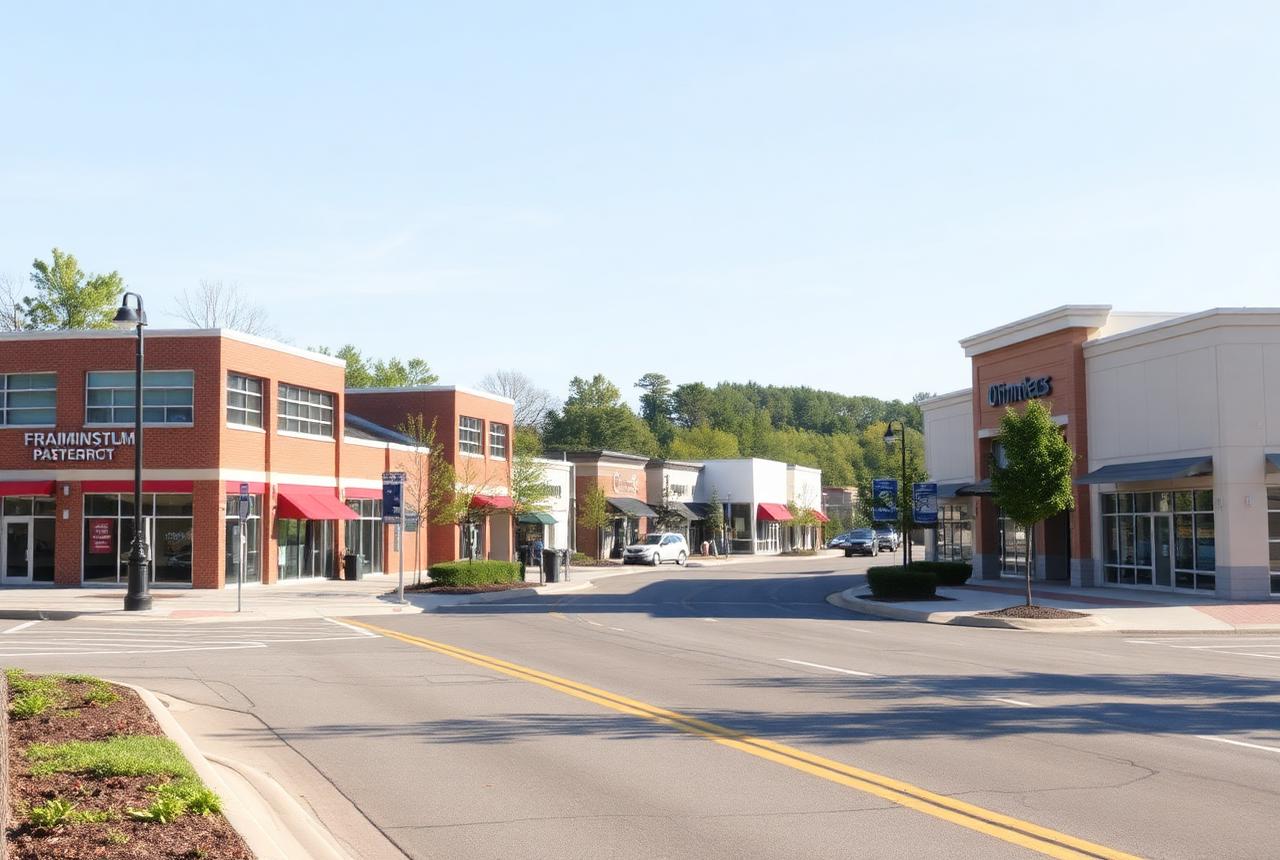
Framingham sits on a major commercial corridor between Boston and Worcester, which gives cannabis retail here access to a broad regional customer base rather than a single neighborhood. Businesses drawing customers from multiple directions tend to see steadier volume but also more variable product demand, which makes purchasing and inventory analysis a recurring priority.
MetroWest operators also frequently look at additional sites, because the surrounding communities are close together and reachable. That makes location-level reporting worth building before it is strictly necessary.
Cannabis Accounting Services for Framingham Businesses
Cannabis businesses need the same core accounting functions as any other company — accurate books, reliable financial statements, filed tax returns — plus several requirements that are specific to the industry. Inventory has to be tracked with far more precision than in most retail sectors, operational tracking data has to agree with the financial records, and the federal tax treatment of the industry places unusual weight on how cost of goods sold is calculated and documented.
The work below describes what a Framingham operator typically needs. Engagements are scoped to the business: a single-location retailer needs a different mix from a vertically integrated company running cultivation, production and retail under one ownership group.
Bookkeeping & Monthly Close
Recording transactions, reconciling bank and cash accounts, maintaining accounts payable and receivable, and closing each month on a defined schedule. MetroWest operators benefit from bookkeeping that keeps inventory receipts, vendor bills and sales data aligned throughout the month.
Inventory & Cost of Goods Sold
Maintaining inventory records, valuing inventory consistently, and calculating cost of goods sold from actual purchase or production data rather than estimates.
Seed-to-Sale & POS Reconciliation
Comparing the state-mandated tracking system, the point-of-sale system and the general ledger so the three agree, with documented explanations for the differences that remain.
280E Support & Documentation
Structuring the books so cost of goods sold is separated from operating expense under the applicable federal rules, and retaining the documentation that supports the position.
Tax Preparation & Planning
Preparing federal and Massachusetts business returns, coordinating state and local cannabis tax obligations, and planning for payment timing across the year.
Financial Reporting
Producing an income statement, balance sheet and cash flow statement each period, with margin and expense detail management can act on.
Payroll Accounting
Recording payroll to the ledger, reconciling payroll liabilities, and coding labor cost by department and location for cost analysis.
CFO-Level Advisory
Budgeting, forecasting, margin analysis and expansion planning for operators who need more than historical reporting. CFO-level support here often models a second MetroWest site against the performance the existing location actually delivers.
Each of these areas has a dedicated service page with a fuller explanation of the method: cannabis bookkeeping, 280E tax compliance, tax preparation, METRC reconciliation, financial reporting, cash flow planning, cannabis payroll and fractional CFO services.
Dispensary Bookkeeping & Retail Accounting in Framingham
Retail cannabis produces a large volume of small transactions, and the financial accuracy of the whole business depends on capturing them correctly the first time. Framingham retail draws from a wide MetroWest catchment, so product mix analysis usually reveals more than total revenue trends do. The daily requirement is straightforward in principle: sales recorded in the point-of-sale system should agree with the cash and card settlement actually received, and both should agree with what is recorded in the general ledger.
Where those three do not agree, the difference needs an explanation — a timing difference, a void or refund, a discount recorded outside the system, a cash handling error, or a genuine loss. Explaining differences while the detail is still available is straightforward. Explaining them eleven months later usually is not.
- Gross sales, discounts, refunds and net sales reported separately rather than as one figure
- Card settlement and cash deposits reconciled to recorded sales on a defined cadence
- Cash handling procedures documented, including counts, transfers and variance review
- Cost of goods sold recorded so gross margin can be read by product category
- Inventory counted on a schedule and reconciled to the recorded balance
- Month-end close completed on a repeatable timetable so results are comparable
The output of that discipline is a monthly income statement a Framingham owner can actually use: revenue net of discounts, cost of goods sold based on real inventory movement, gross margin by category, and operating expense grouped so the largest costs are visible. See dispensary accounting for the full retail methodology.
280E, Cost of Goods Sold & Cannabis Tax Treatment
Section 280E of the Internal Revenue Code has historically limited the deductions and credits available to businesses trafficking in federally controlled substances, while cost of goods sold remains an offset to gross receipts. In practice that has made the calculation of cost of goods sold the single most consequential accounting decision a cannabis business makes, because it determines how much of the company's spending reduces federal taxable income.
What can be included in cost of goods sold depends on the type of business and the applicable rules — a retailer's inventory cost is generally built differently from a producer's. The practical requirement for a Framingham operator is the same in either case: a defensible method, applied consistently, with records that show how each figure was derived.
- A chart of accounts that separates inventoriable cost from operating expense at entry
- An inventory valuation method chosen deliberately and applied the same way each period
- Purchase, production and transfer records retained to support recorded cost
- Allocation methods, where used, written down and applied consistently
- Reconciliations and supporting schedules retained with the period they belong to
Federal treatment of cannabis has been the subject of ongoing regulatory and legislative attention, and the rules that apply may change over time. Positions should be based on the law in effect for the tax period in question, and any change is generally applied prospectively unless the guidance says otherwise. That is another reason contemporaneous records matter: if treatment changes, a business with clean historical records is in a much stronger position than one reconstructing prior years. Detail is on the 280E tax compliance page and in the 280E explained resource.
Inventory, METRC & Seed-to-Sale Reconciliation
Massachusetts licensees use a state-mandated seed-to-sale tracking system to record cannabis inventory and movement. That system exists for regulatory purposes; it is not an accounting ledger, and it does not produce financial statements. The accounting requirement is to reconcile it — to show that the units tracked operationally correspond to the inventory value and cost of goods sold recorded in the books.
This firm is an independent accounting practice. It is not affiliated with, endorsed by, or acting on behalf of any state agency or tracking-system vendor, and it does not provide legal advice or regulatory representation. The work described here is accounting and tax work: reconciling operational data to financial records so the financial records are supportable.
Reconciliation sequence — Framingham operations
- 01Establish the opening balance. Confirm the prior period's ending inventory in the ledger and agree it to the closing operational records.
- 02Capture the period's movement. Pull purchases, transfers, production output, sales, samples, waste and destruction for the period from each system.
- 03Build the rollforward. Opening inventory plus additions less cost of goods sold and other reductions should equal the closing balance.
- 04Compare across systems. Set the tracking system, the point-of-sale system and the ledger side by side at the category or SKU level.
- 05Investigate variances. Trace each material difference to a cause — timing, unrecorded waste, data entry, pricing or a genuine loss.
- 06Record and document. Post the adjustments the investigation supports and retain the working papers behind them.
Cultivators supplying MetroWest retail need production cost records that make transferred product cost defensible. Manufacturers serving this corridor need product-level cost records covering materials, labor and packaging to evaluate wholesale pricing. More detail is available on the METRC reconciliation page and in the METRC guide.
Financial Reporting & Cash Flow for Framingham Operators
Financial statements answer two different questions. The income statement explains profitability over a period; the balance sheet and cash flow statement explain what the business owns, owes and actually collected. Cannabis operators frequently discover that these two answers diverge, because profit that is sitting in inventory or has already been committed to a tax obligation is not cash available to spend.
Regional retail with variable product demand benefits from cash forecasting that links purchase commitments to expected sell-through.
What a monthly reporting package should contain
- Income statement with revenue, discounts, cost of goods sold, gross margin and operating expense detail
- Balance sheet with inventory, fixed assets, payables and accrued tax obligations stated accurately
- Cash flow statement or a cash summary reconciling profit to the change in cash
- Comparison to the prior period and to the same period in the prior year
- Key operating metrics — gross margin percentage, labor as a percentage of revenue, inventory turn
- A short written summary of what changed and why
Forward-looking planning
Historical reporting is necessary but not sufficient. A rolling cash forecast — commonly built on a thirteen-week horizon — projects collections, payroll, rent, inventory purchases, debt service and tax payments so a shortfall is visible weeks before it arrives. For a Framingham business managing a significant fixed cost base, that lead time is often the difference between a planned decision and a forced one. See cash flow planning and financial reporting.
Cannabis Accounting for MetroWest Operators
Corridor markets reward inventory discipline. When customers arrive from a wide area, product preferences vary more than they do in a tightly local market, and slow-moving stock accumulates quietly. Inventory turn reporting by category identifies that accumulation while it is still a purchasing adjustment rather than a write-down conversation.
The second MetroWest theme is comparability. Operators evaluating a second location need to know what the first one actually produces after all its costs, including allocated overhead where relevant. That number is only reliable when location-level coding has been in place long enough to generate a track record.
- Inventory turn reviewed by category to catch slow-moving stock early
- Location-level results maintained so sites can be compared meaningfully
- Overhead allocation, where used, documented and applied consistently
- Purchasing decisions grounded in sell-through data rather than intuition
Working With a Cannabis Accountant in Framingham
Most engagements follow the same arc regardless of size. The first phase establishes where the business currently stands, the second phase builds or repairs the accounting structure, and the third phase settles into a recurring monthly cycle that produces reliable numbers on a predictable schedule.
Engagement structure — Framingham businesses
- 01Consultation. A conversation about license types, entity structure, current systems, reporting needs and any open issues from prior periods.
- 02Assessment. Review of the existing books, inventory records, prior returns and reconciliation history to identify what is reliable and what is not.
- 03Structure. Chart of accounts, inventory and cost of goods sold methodology, departmental or location coding, and a documented close calendar.
- 04Cleanup. Where prior periods are incomplete or unreconciled, bringing them to a supportable state before ongoing work begins.
- 05Monthly cycle. Recurring bookkeeping, reconciliation, inventory review, close and financial statement delivery on a fixed schedule.
- 06Tax and advisory. Return preparation, tax payment planning, and ongoing forecasting, margin and expansion analysis as the business requires.
When operators typically seek specialized support
Cannabis accounting differs enough from general small-business accounting that a well-intentioned generalist can create expensive problems, particularly around inventory and cost of goods sold. In MetroWest, the usual trigger is an inventory balance that keeps growing faster than sales. Common signals include books that no longer reconcile, inventory values nobody can explain, financial statements arriving too late to be useful, a tax bill that was not anticipated, or an outside stakeholder requesting reporting the current process cannot produce.
Cannabis Business Types Served in Framingham
Different license types create different accounting problems. Retail is transaction-volume driven; cultivation and manufacturing are cost-accounting driven; vertically integrated groups need both plus consolidation.
Dispensaries & Retailers
High transaction volume, point-of-sale reconciliation, cash controls, category margin analysis and inventory accuracy. See dispensaries.
Cultivators
Production cost accumulation across the growing cycle, labor and facility cost capture, and harvest-to-inventory recording. See cultivators.
Manufacturers & Processors
Raw materials, work-in-process, finished goods, packaging cost and product-level margin. See manufacturers.
Vertically Integrated Operators
Multi-entity structures, intercompany transfers, consolidation and department-level reporting. See multi-location operators.
Delivery Operators
Route-level cost, inventory in transit, driver cash handling and per-order margin. See delivery services.
Ancillary Businesses
Companies serving the industry without touching the plant, which face different tax treatment. See ancillary businesses.
Massachusetts Cannabis Tax & Regulatory Context
Adult-use cannabis in Massachusetts is regulated by the Cannabis Control Commission under Chapter 94G and the Commission's regulations at 935 CMR 500, with medical-use operations addressed at 935 CMR 501. Licensees record inventory and product movement in the state's seed-to-sale tracking system, and host community agreements govern certain local obligations.
On the tax side, adult-use retail sales in Massachusetts are generally subject to a 10.75% state cannabis excise tax and the 6.25% state sales tax, and a municipality may impose a local option tax of up to 3%. Those amounts are collected from customers and remitted; they are not revenue, and recording them as revenue overstates both the top line and the apparent margin of a Framingham retail operation.
- Cannabis excise and sales tax recorded as liabilities rather than as revenue
- Local option tax, where applicable, tracked separately for remittance
- Massachusetts corporate excise and federal income tax obligations planned for across the year
- Payroll tax liabilities reconciled monthly rather than reviewed at filing time
- Regulatory and licensing costs recorded consistently in the appropriate accounts
Regulations and tax rates change. This page is general information rather than legal or tax advice for a specific business, and current requirements should be confirmed against official sources and applied to the facts of the operation. See the Massachusetts cannabis tax guide and accounting guide for a fuller treatment.
Serving Framingham & Surrounding Communities
Cannabis businesses in Framingham and across MetroWest are supported remotely, with meetings arranged when an engagement calls for them.
Communities served in and around Framingham include Natick, Marlborough, Ashland, Sudbury and Worcester. No physical office is maintained in Framingham; engagements are delivered remotely using cloud accounting systems and secure document exchange, which is how the majority of cannabis accounting work is performed regardless of location.
Cannabis Accounting FAQs — Framingham
- What does a cannabis CPA in Framingham do?
- A cannabis CPA working with a Framingham business maintains the books and reconciliations, tracks inventory and cost of goods sold, reconciles point-of-sale and seed-to-sale data to the ledger, prepares monthly financial statements, supports 280E analysis, prepares tax returns and provides forecasting and expansion advisory support.
- How much does cannabis accounting cost for a Framingham business?
- Fees depend on scope: transaction volume, number of locations and entities, license types, whether production cost accounting is required, and whether prior periods need cleanup before ongoing work can start. Most engagements are quoted as a recurring monthly fee for bookkeeping, reconciliation, close and reporting, with tax preparation and advisory work priced separately or bundled. Scope and pricing are confirmed after an initial review of the business.
- Do I need a cannabis-specific accountant, or will a general CPA work?
- A general accountant can handle routine bookkeeping, but cannabis introduces requirements most practices do not encounter: inventory and cost of goods sold treatment that carries unusual tax weight under federal rules, reconciliation between a state tracking system and the financial records, and industry-specific cash and reporting practices. Errors in those areas are typically expensive to correct later, which is why operators generally engage someone who works in the industry regularly.
- Can you work with a Framingham business remotely?
- Yes. Accounting work is delivered through cloud accounting platforms, point-of-sale and tracking system reports, and secure document exchange. A Framingham operator receives the same monthly bookkeeping, reconciliation, close and reporting process regardless of physical location, with meetings by video or phone and on-site visits arranged where an engagement calls for one.
- How does 280E affect what my business owes?
- Section 280E has historically disallowed ordinary business deductions for companies trafficking in federally controlled substances, while permitting cost of goods sold as an offset to gross receipts. The practical effect is that federal taxable income is often far higher than book profit, and the accuracy of the cost of goods sold calculation drives the size of that gap. Because federal treatment of cannabis has been subject to change, positions should reflect the rules in effect for the period being reported.
- What financial reports should I expect each month?
- An income statement showing revenue, discounts, cost of goods sold, gross margin and operating expense; a balance sheet with reconciled inventory, fixed asset, payable and tax liability balances; and a cash flow statement or cash summary. Useful packages also include prior-period and prior-year comparisons, category-level margin, and a short written explanation of what moved during the period.
- How does seed-to-sale reconciliation actually work?
- The tracking system, the point-of-sale system and the general ledger are compared for the same period at the category or SKU level. An inventory rollforward — opening balance plus additions less cost of goods sold and other reductions — should reconcile to the closing balance. Differences are traced to a cause such as timing, unrecorded waste, data entry or genuine loss, and supported adjustments are recorded with working papers retained.
- My books are behind. Can prior periods be cleaned up?
- Usually, yes. Cleanup starts with an assessment of what source data still exists — bank statements, point-of-sale exports, tracking system reports, vendor invoices and payroll records. Prior periods are rebuilt from that data, inventory and cost of goods sold are recalculated, and the resulting balances are reconciled. How long it takes depends on how many periods are affected and how complete the underlying records are.
- Which taxes apply to cannabis sales in Massachusetts?
- Adult-use retail sales are generally subject to a 10.75% state cannabis excise tax and the 6.25% state sales tax, and municipalities may impose a local option tax of up to 3%. Those are collected from customers and remitted rather than earned, so they belong in liability accounts. Separately, the business owes federal income tax and Massachusetts corporate excise on its own results. Current rates and requirements should be confirmed against official sources.
- Do you provide legal or regulatory compliance representation?
- No. This is an independent accounting and tax practice, not a law firm, and it is not affiliated with or acting on behalf of any state agency or tracking-system vendor. The work covers accounting, inventory and cost records, financial reporting, tax preparation and financial advisory support. Licensing, regulatory representation and legal questions should be directed to qualified counsel.
- When is the right time to bring in a cannabis accountant?
- Before opening is ideal, because entity structure, chart of accounts and inventory methodology are far cheaper to set up correctly than to retrofit. Beyond that, the common triggers are books that no longer reconcile, unexplained inventory values, late or unreliable financial statements, an unexpected tax liability, an outside stakeholder requesting reporting, or a planned second location.
- How can a Framingham dispensary identify slow-moving inventory?
- By tracking inventory turn by product category — the relationship between cost of goods sold for a category and the average inventory held in it. Categories with low turn are tying up cash and carry a higher risk of markdown. Reviewing that report monthly turns the issue into a purchasing adjustment rather than a year-end write-down.
Cannabis Accounting Services
Cannabis Bookkeeping
Monthly bookkeeping built for licensed cannabis operators, including 280E-aware chart of accounts, reconciliations, and close packages.
Explore Cannabis BookkeepingDispensary Accounting
Dispensary accounting, bookkeeping, POS and cash reconciliation, inventory and COGS, financial reporting, and 280E support for licensed cannabis retailers.
Explore Dispensary Accounting280E Tax Planning and Compliance
Section 280E planning, cost of goods sold methodology, and documentation support for licensed cannabis operators throughout Massachusetts.
Explore 280E Tax Planning and ComplianceTax Preparation
Federal and state tax return preparation for licensed cannabis businesses, with inventory-driven cost of goods sold support and reconciled workpapers.
Explore Tax PreparationSeed-to-Sale Reconciliation
Reconciliation between the statewide seed-to-sale tracking system, inventory subledgers, and the general ledger for licensed Massachusetts cannabis operators.
Explore Seed-to-Sale ReconciliationFinancial Reporting
Monthly financial statements, KPI dashboards, and stakeholder reporting packages prepared for licensed cannabis operators.
Explore Financial ReportingCash Flow Planning
Cash forecasting, working capital analysis, and cash control design for licensed cannabis operators managing tax and inventory demands.
Explore Cash Flow PlanningFractional CFO Advisory
Part-time CFO support for licensed cannabis operators: forecasting, capital planning, KPI reporting, and board-ready financial packages.
Explore Fractional CFO AdvisoryPayroll Services
Payroll processing and departmental labor allocation for licensed cannabis operators, including production labor capitalization support.
Explore Payroll ServicesBusinesses We Support
Dispensaries
Accounting, inventory, and tax support for licensed retail cannabis stores, covering point-of-sale reconciliation, cash controls, and margin reporting.
Explore DispensariesCultivators
Batch costing, yield analysis, and inventory accounting for licensed cannabis growers, from propagation through harvest and transfer.
Explore CultivatorsManufacturers
Process costing, yield variance, and inventory accounting for licensed extraction and infused product manufacturers.
Explore ManufacturersDelivery Services
Accounting support for licensed cannabis delivery operations covering route costing, cash handling, driver payroll, and order reconciliation.
Explore Delivery ServicesMassachusetts Cannabis Resources
Cannabis Accounting Guide
Transaction-level cost isolation, Section 471-11 COGS treatment, general ledger design, a 10-to-15 day close checklist, and Metrc-to-warehouse reconciliation for licensed operators.
Explore Cannabis Accounting GuideMassachusetts Cannabis Tax Guide
Federal Schedule III rescheduling procedure, medical and adult-use cost allocation under IRC 280E, the 10.75% excise, 6.25% sales tax, local option tax, and city-level reporting rules.
Explore Massachusetts Cannabis Tax Guide280E Explained
A plain-language explanation of Internal Revenue Code Section 280E, what it disallows, and how inventory costing determines recoverable cost.
Explore 280E ExplainedSeed-to-Sale Guide
How to reconcile the statewide seed-to-sale tracking system with accounting records, including variance causes, cadence, and documentation practices.
Explore Seed-to-Sale GuideNearby Locations
Newton
Cannabis accounting, bookkeeping, 280E support and tax preparation for cannabis businesses operating in Newton.
Explore NewtonWorcester
Cannabis accounting, bookkeeping, 280E support and tax preparation for cannabis businesses operating in Worcester.
Explore WorcesterBoston
Cannabis accounting, bookkeeping, 280E support and tax preparation for cannabis businesses operating in Boston.
Explore BostonTalk With a Cannabis Accountant About Your Framingham Operation
Call to discuss your license types, current books and reporting needs, or schedule a consultation to review what a Framingham engagement would involve.